The Importance of Rules in MMA: Safety, Fairness, and Responsibility
Mixed Martial Arts (MMA) has evolved from its early “no holds barred” reputation into one of the most regulated combat sports in the world. The rules aren’t there to dilute the sport’s raw intensity — they exist to protect fighters, ensure fairness, and uphold the sport’s legitimacy.
From the Unified Rules of MMA to local athletic commissions, every regulation has a purpose: to keep fighters safe while allowing the world’s most complete form of combat competition to thrive.
The Purpose of Rules: Protecting Fighters and the Sport
At its core, MMA’s rules are about balancing danger with discipline. The sport permits striking, grappling, submissions, and ground fighting — areas where accidents can happen quickly and lethally without boundaries.
Rules like prohibiting spikes to the neck, throat strikes, and eye gouges exist because those techniques carry catastrophic risk. Even recently legalized maneuvers such as 12–6 elbows are closely monitored under the updated Unified Rules, reflecting the sport’s gradual evolution toward both realism and safety.
Referees, commissions, and promotions have the shared duty of making sure the cage remains a place of controlled competition — not chaos.
Case Study — Ken Sekeletu vs Billy Oosthuizen: DQ, Pattern of Fouls, and a Referee’s Vigilant Performance
At EFC 128, the main event between Ken Sekeletu and Billy Oosthuizen ended in controversy. Sekeletu was disqualified in Round 3 after landing repeated illegal blows to the back of Oosthuizen’s head. Earlier in the fight, he had already been deducted a point for an illegal elbow to the spine.
Before the event, Sekeletu also failed to make the featherweight limit, losing his interim title on the scales. Oosthuizen was awarded the interim featherweight belt — but the moment was overshadowed by the fouls and weigh-in drama.
EFC 128:
Sekeletu vs Oosthuizen for the Vacant Interim Featherweight Title
Credit must go to the referee, whose quick interventions and measured escalation — from warning, to deduction, to disqualification — prevented further damage and upheld fighter safety in real time.

This wasn’t the first time Sekeletu’s name had been attached to rule-breaking controversy:
-
EFC 120: His TKO win over Vince Bembe was overturned to a No Contest after a low blow impacted the fight’s outcome. (Tapology)
-
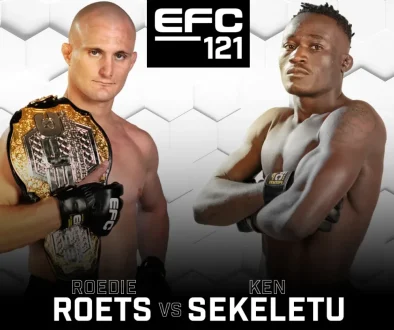
EFC 121: He defeated Roedie Roets, but the result drew criticism after Roets appeared to suffer from illegal strikes, including to the back of the head. (AfroSportNow)
Now, at EFC 128, another rule breach led to a clear disqualification — reinforcing the importance of consistent officiating and fighter accountability.
Understanding the Referee’s Tools: Warnings, Deductions, and Disqualifications
Referees are trained to maintain fairness and safety, and they have several escalating options when a foul occurs:
Description:
Given for accidental or minor fouls.
Impact:
None on scorecards.
Referee’s Considerations:
Fighter awareness, no serious damage.Description:
For repeated or significant fouls after a warning.
Impact:
Penalizes offending fighter on judges’ cards.
Referee’s Considerations:
Intent, repetition, damage caused.
Description:
Accidental foul prevents continuation before minimum rounds.
Impact:
Fight nullified (no winner/loser).
Referee’s Considerations:
Timing, intent, fairness.Description:
Intentional or repeated foul prevents continuation.
Impact:
Opponent declared winner.
Referee’s Considerations:
Intent, prior warnings, safety risk.
Referees must make rapid decisions based on intent, damage, and pattern.
In the Sekeletu vs Oosthuizen fight, each infraction was caught as it happened — a textbook example of effective officiating under pressure.
The Evolution of the Ruleset
The Unified Rules of MMA, adopted by most global promotions, have continued to evolve. Once controversial strikes like 12–6 elbows are now permitted under modern interpretations, but many dangerous moves — such as groin strikes, headbutts, or strikes to the spine — remain illegal for clear safety reasons.
As MMA continues to grow, the sport’s maturity lies not in relaxing the rules but in enforcing them consistently.
Fighter safety isn’t just a moral obligation; it’s a legal and promotional one.
Legal and Civil Liability: When a Foul Crosses the Line
A question worth asking is what happens when a fighter intentionally breaks the rules and causes serious or fatal injury.
Under most athletic commissions, competitors are protected under assumed risk — meaning they accept potential injury as part of the sport. But that protection applies only to legal competition activity.
If a fighter intentionally throws an illegal strike — for example, continuing to punch the back of an opponent’s head after warnings — and it leads to death or permanent injury, they could be held criminally liable. While there are no known MMA cases of homicide charges following a foul, similar incidents in boxing have raised civil suits and disciplinary bans.
The line between sports misconduct and criminal assault is thin when intent can be proven. Does this case show intent, we do not think so however we do feel it important to raise the severity of where intentionally breaking rules can land you.

The Bigger Picture: Respecting the Rules to Protect the Future
Rules in MMA aren’t a constraint — they are what make the sport sustainable. Every time a referee enforces them, it sends a message that fighter safety and integrity matter more than chaos or controversy.
As seen in the case of Ken Sekeletu vs Billy Oosthuizen, strict officiating and adherence to the rules prevent disaster and preserve the sport’s credibility.
And while we’ve focused here on fouls and safety, one lingering question remains —do you want to see Ken Sekeletu and Billy Oosthuizen run it back, or should the Interim Champion face another contender?